Turning 65 is a major milestone—not just for life, but for your health coverage. If you live in Florida and are nearing Medicare eligibility, it's important to understand the steps, deadlines, and decisions involved in getting the right coverage. As a licensed Medicare broker based in Jacksonville, I help people across Florida enroll in Medicare with confidence and avoid costly mistakes.
This comprehensive checklist will walk you through everything you need to do before, during, and after your 65th birthday to ensure smooth Medicare enrollment.
Step 1: Understand When You’re Eligible
You become eligible for Medicare at age 65 if:
- You are a U.S. citizen or permanent resident
- You or your spouse have worked and paid Medicare taxes for at least 10 years
Most people qualify for premium-free Part A, which covers hospital insurance. You’ll likely need to pay a premium for Part B, which covers outpatient care, doctor visits, and preventive services.
Your Initial Enrollment Period (IEP) is a 7-month window:
- Starts 3 months before your 65th birthday
- Includes your birth month
- Ends 3 months after your birthday
Example: If your birthday is July 10, your IEP runs from April 1 to October 31.
Enrolling during this window ensures your coverage starts on time and helps you avoid penalties for late enrollment.
Step 2: Decide If You Need to Sign Up
Some people are enrolled in Medicare automatically:
- If you're already receiving Social Security or Railroad Retirement Board benefits
If not, you’ll need to enroll manually through:
- The Social Security Administration (SSA.gov)
- Your local SSA office
If you’re still working or have employer coverage, you may be able to delay Part B without penalty. This is especially common for people who work past 65 and have creditable group coverage. It’s important to evaluate whether your existing coverage qualifies, and how it compares to Medicare options.
Need help deciding? I can review your situation in a free, no-obligation consultation.
Step 3: Learn the Parts of Medicare
To choose wisely, you need to understand the core parts of Medicare and what each covers:
- Part A – Hospital Insurance: Covers inpatient care, skilled nursing facility stays, hospice care, and some home health services.
- Part B – Medical Insurance: Covers doctor visits, outpatient care, preventive services, mental health services, and durable medical equipment.
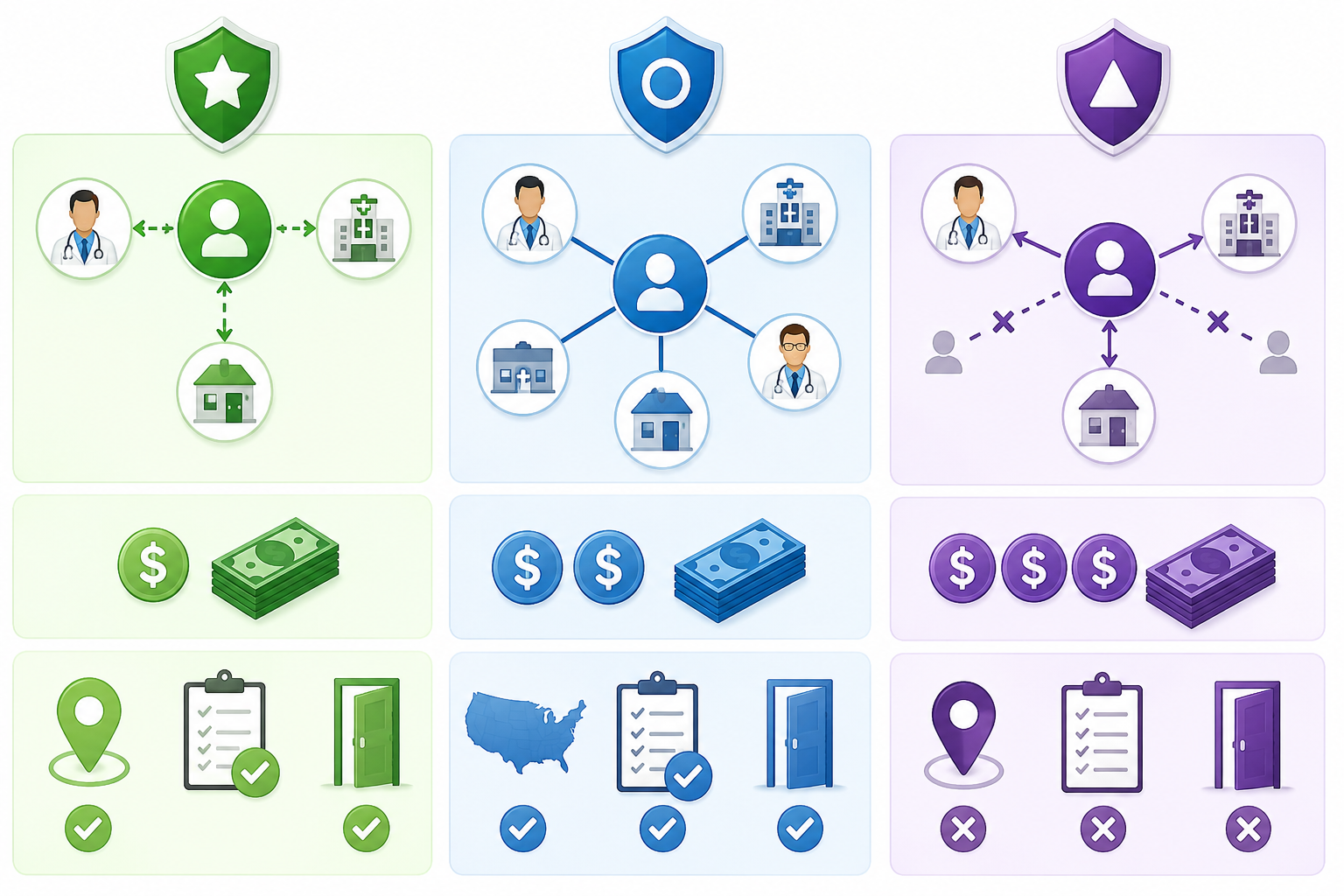
- Part C – Medicare Advantage: Private plans that bundle Parts A and B, and usually Part D. Often include extra benefits.
- Part D – Prescription Drug Coverage: Covers medications. Can be part of an Advantage plan or standalone with Original Medicare.
- Medicare Supplement (Medigap) – Helps pay out-of-pocket costs left by Original Medicare (like deductibles and coinsurance).
Understanding the basics helps you avoid gaps in coverage and unnecessary expenses.
Step 4: Compare Your Coverage Options
There are two primary ways to get Medicare:
Option 1: Original Medicare (Parts A & B) + Add-Ons
With this option, you get federal coverage for hospital and medical care. To complete your protection, you typically add:
- A standalone Part D prescription drug plan, and
- A Medicare Supplement (Medigap) plan for out-of-pocket costs
This setup gives you broad provider access and is great for those who travel frequently or prefer predictable medical expenses.
Option 2: Medicare Advantage (Part C)
Medicare Advantage plans are offered by private insurance companies. They:
- Include Part A, Part B, and usually Part D
- Often offer extras like dental, vision, hearing, and gym memberships
- May have lower premiums but include copays and a provider network
Choosing between these two depends on your personal healthcare preferences, costs, and lifestyle.
Step 5: Know the Enrollment Deadlines
Missing a Medicare enrollment window can result in lifelong penalties. It’s essential to understand when and how to enroll:
- Initial Enrollment Period (IEP): Enroll when you first become eligible at 65.
- Annual Enrollment Period (AEP): From October 15 to December 7 each year. Switch or enroll in Medicare Advantage and/or Part D.
- General Enrollment Period (GEP): From January 1 to March 31. Enroll in Part A and B if you missed your IEP, but penalties may apply.
- Medicare Advantage Open Enrollment Period: Also January 1 to March 31. Switch Medicare Advantage plans or return to Original Medicare.
- Special Enrollment Periods (SEPs): Triggered by specific life events (e.g., loss of coverage, moving, Medicaid eligibility).
Knowing these timeframes ensures you don’t miss out on coverage or face unnecessary fees.
Step 6: Gather What You’ll Need to Enroll
To prepare for enrollment, have these documents and details ready:
- Your Social Security number
- Proof of age (birth certificate, driver’s license)
- Citizenship or legal residency documentation
- List of current doctors and specialists
- List of current medications
- Employer coverage information (if you have a group plan)
- Preferred pharmacy and hospital details
Having everything organized in advance helps avoid delays in processing your application.
Step 7: Watch Out for These Common Mistakes
Medicare is complex. These common missteps can cost you money or leave you underinsured:
- Missing the enrollment deadline and facing lifetime penalties
- Choosing a plan without confirming your doctors or medications are covered
- Assuming Medicare covers everything (dental, vision, hearing, long-term care are not covered)
- Trying to enroll in both a Medicare Supplement and Medicare Advantage plan (you must choose one or the other)
- Failing to review your plan each year, which may lead to higher costs or dropped coverage
As your agent, I help you avoid these issues and stay ahead of changes.
Step 8: Review Annually and Ask Questions
Even after you enroll, it’s important to review your plan annually. Why?
- Your health needs may change
- Your plan’s benefits and premiums can change
- Your medications may no longer be covered
During the Annual Enrollment Period, I help clients compare their current coverage with new plan offerings, ensuring you’re always getting the best value and protection available in your area.
Step 9: Understand How Medicare Works With Other Coverage
Still working? Have coverage through a spouse’s employer? You may have multiple insurance sources. It’s essential to understand:
- Who pays first? (Medicare or your group plan)
- Whether your employer plan is creditable coverage
- If delaying Medicare will trigger penalties later
I can help you coordinate your benefits and avoid overlaps or coverage gaps.
Get Local Help at No Cost
Medicare isn’t one-size-fits-all. Your best option depends on your unique health, budget, and lifestyle needs. That’s why personalized help matters.
As a licensed, independent Medicare broker based in Jacksonville, I offer:
- Free consultations
- Side-by-side plan comparisons
- Help avoiding penalties
- Support beyond enrollment
You don’t need to navigate Medicare alone. I’m here to provide clear, honest advice—and I’m just a phone call away.
Contact Derek Rogers Today
HealthMarkets Insurance – Derek Rogers
10199 Southside Blvd #100
Jacksonville, FL 32256
(904) 580-7231
derek.rogers@healthmarkets.com
Let’s make Medicare simple — together.